Taking Charge and Embracing a Healthy Lifestyle

Maintaining Your Health While Living with Chronic Kidney Disease (CKD)
You can live a healthy life despite having chronic kidney disease or CKD. Taking charge of your health will improve your overall well-being and even slow the progression of CKD. But where to start? Here are some areas you can focus on. Don’t feel like you have to do everything all at once. Pick one and start there.
Prioritize Your Physical and Mental Health
- Make you and your health a focus. With busy lives, it’s easy to put everyone else first and yourself last. Care for yourself so you can care for others. If finding time is difficult, put aside 15 minutes daily just for you. Pursue your hobbies, read, or relax.
- Attend your appointments. Don’t wait until you are sick to see your doctor. Regular visits keep you healthier. Follow your care plan. If you don’t understand something, ask questions until you do.
- Manage stress. Chronic stress can affect blood pressure and blood sugar levels. Find healthy ways to cope with stress. Consider calming activities like prayer, mindfulness, meditation, time in nature, or deep breathing.
- Get enough sleep. Aim for 7-8 hours each night. Turn off electronics at least 2 hours before bedtime. Keep your sleeping area cool, dark, and without distractions.
- Stay engaged. Seek support when you need it. Sharing your experiences and seeking help from family, friends, or support groups keeps you connected and engaged.
- Stay positive. It’s easy to dwell on the negative. Staying positive will decrease your stress and anxiety. CKD is simply part of your journey. Laugh and find humor in your day.
Manage Other Health Problems
- Control blood pressure. High blood pressure worsens kidney damage. Know your blood pressure goal, check it regularly, and bring your readings to your appointments.
- Manage diabetes: Uncontrolled diabetes can damage blood vessels in your kidneys as well as your heart and brain. Follow your doctor’s advice for managing your blood sugar levels.
- Follow your labs and treat CKD complications, such as anemia, acidosis, and bone disease. Some complications of CKD have no symptoms, so your routine lab work is vital to diagnosing any complications that may occur. If you need to learn more about CKD complications, attend our complimentary ‘CKD and Me” introductory group class.
- Quit smoking. Smoking can damage blood vessels and increase your risk of heart attack, stroke, and kidney injury. If needed, get help to quit.
- Limit alcohol intake: Too much alcohol can increase blood pressure, disturb your sleep, increase anxiety, and even worsen kidney problems.
Nourish Your Body with Kidney-Friendly Foods
- Eat properly for kidney health. A healthy, balanced diet is crucial to help your kidneys maintain a healthy balance of salts and minerals. Focus on whole foods and avoid processed or ultra-processed food items, which often contain salt and hidden additives. Include plenty of fruits, vegetables, whole grains, and lean proteins. You will feel better when you substitute healthy foods for “junk” or “fast food,” your kidneys and body will appreciate it.
- Watch your sodium (commonly called salt). Limiting the amount of sodium in your diet to less than 2000mg a day helps reduce strain on your kidneys, and many medications work better with a lower sodium diet. Pay attention to food labels and choose options low in sodium or salt.
- Consult with a DNA Dietitian. Our specialized dietitians can help you create a personalized meal plan or provide specific dietary recommendations, including managing protein, phosphorus, and potassium if needed. Ask your doctor for a Medical Nutrition Therapy (MNT) consultation.

Welcome Exercise and Movement
- Regular exercise and movement can improve energy levels, sleep, bone, and mental health. It can also help manage blood pressure and diabetes.
- Start slow and be consistent. If you’re new to exercise, gradually build up your activity level. Try to be active for at least 30 minutes most days of the week.
- Gym or no gym? You don’t need a gym membership to be active. Find activities you enjoy, such as walking, swimming, cycling, or dancing.
- Some pain relievers (called NSAIDs) can be harmful to the kidneys. Consult your doctor or pharmacist about safe pain relief options. For a list of NSAIDs, ask your healthcare team for a DNA handout, NSAIDs: Medications that will damage your kidneys.
- Bring a list of medications or your medication bottles to your visits so you can review all your medications with your doctor, including any vitamins and supplements. Most pharmacies will print you a list of your medications, or you can find the list online through their app.
New Patient Educational Materials Now Available
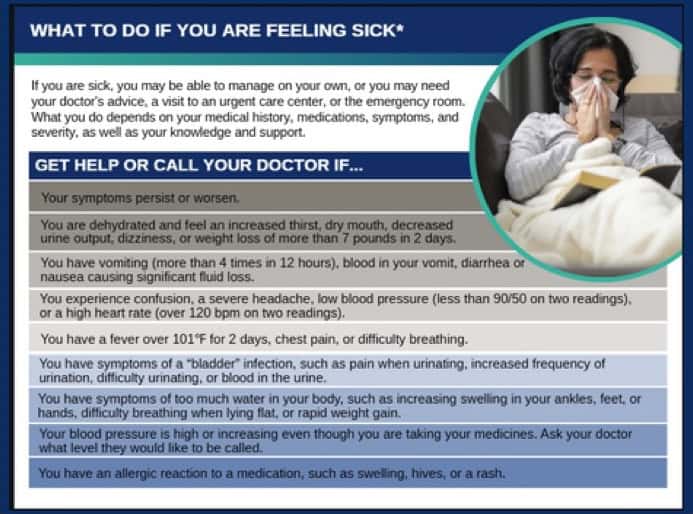
WHAT TO DO IF YOU ARE FEELING SICK
If you have CKD and you’re feeling sick, it’s important to know when and where to seek medical help. This handout describes when you should call your doctor and lists reliable sources with advice on what to do if you visit an urgent care center or hospital.
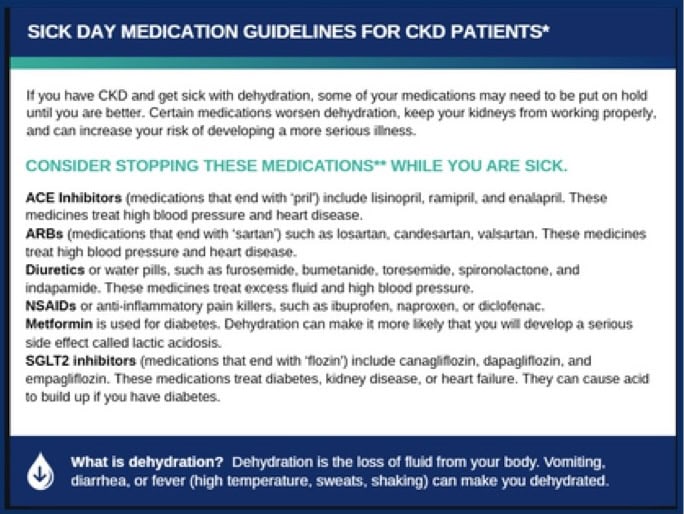
SICK DAY MEDICATION GUIDELINES FOR CKD
If you have CKD and are sick with dehydration, some common kidney medications may need to be paused to avoid worsening your condition. This handout/card gives general information on which medications are typically held.
Ask your healthcare team for our two newest handouts. Keep these cards and avoid visiting the urgent care center or emergency room.
Patient Education Programs
DNA offers a variety of educational programs for patients with chronic kidney disease (CKD). Our options range from the basic group class, “CKD and MeTM,” to specialized one-on-one workshops, “My Kidneys. My Options. My Life®. ” We also provide education focused on goals of care discussions during ‘Advance Care Planning’ visits, as well as hands-on experience with different dialysis options in our ‘CKD Treatment Options Clinic.’ For more information about all of our services, please visit dneph.com/education
Transitional Care Management Team
The Transitional Care Management (TCM) team at DNA helps you transition smoothly after a hospital stay. At DNA, we understand that this can be a challenging time, and we’re here to support you every step of the way. Our dedicated TCM team works closely with hospital staff, primary care physicians, and other healthcare providers to ensure you receive well-coordinated care.
As part of the TCM visit, you will get the education and support you need to manage your health and stick to your treatment plan. We also provide regular check-ins through follow-up appointments and phone calls to track your progress and answer any questions you might have. We aim to empower you to navigate your healthcare journey successfully and help you achieve the best possible health outcomes. You’re not alone—we’re here to help! Meet our TCM Team!
Let’s Talk About Kidneys Podcast
In this episode of Let’s Talk About Kidneys, Dr. Lauren McDonald, a nephrologist with Dallas Nephrology Associates, explains how chronic kidney disease (CKD) is diagnosed and staged. She highlights key tests like BUN, creatinine, A1C, and eGFR, and stresses the importance of self-advocacy, family history, and managing diabetes and hypertension.